Wednesday, September 27, 2006

Pride of Bilbao


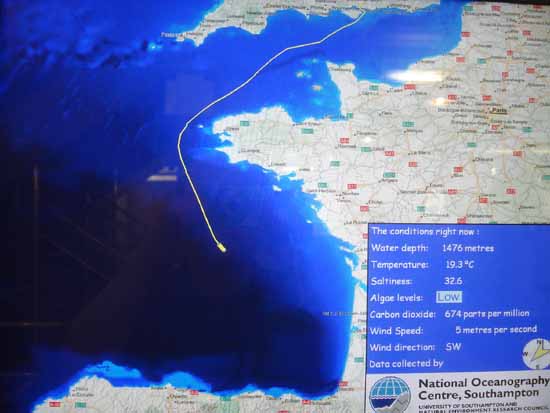
La evolución del huracán Gordon , hacia presagiar lo peor, se estaba desplazando desde la costa de Galicia hacia el Golfo de Bizcaya, exactamente en la ruta del Pride of Bilbao en su camino a Portsmouth.


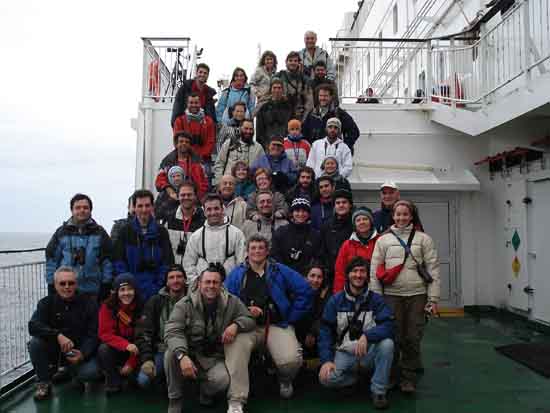
Cincuenta aventureros nos citamos en la terminal de P&O. Todos nos preguntábamos que pasaría con el huracán y con nosotros. De momento el tiempo era engañoso, hacía muy bueno.



Después de embarcar nos informan de que es posible que frente a O´uessant nos juntemos con el huracán y los vientos pueden llegar a fuerza 11, siendo el máximo el 12.


Con una mar en calma partimos rumbo al norte, telescopios y prismáticos listos para observar aves y cetáceos.



Nada más salir, una balsa de unas cincuenta Pardelas es localizada muy cerca de la proa del barco, que al paso de este se levanta, y conseguimos ver hasta cuatro especies diferentes, Pardelas Sombrías en su mayoría , Pardelas Baleares, Pardelas Pichonetas, y una Pardela Cenicienta que destacaba de todas por su mayor tamaño.


Un Halcón Peregrino vuela en dirección a la costa, estábamos a tres millas de esta.

Ya empiezan a observarse Alcatraces, un grupo de jóvenes pasa a lo lejos.
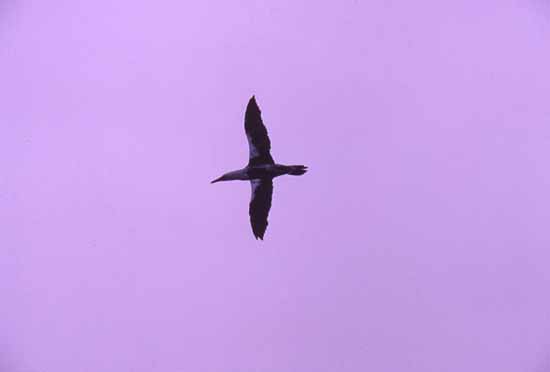


Seguimos mar adentro y ya en aguas pelágicas los primeros resoplidos de ballenas se intuyen entre las ráfagas de viento, Rorcuales Comunes y dos Zifios de Cuvier son localizados.

Dos Tórtolas Comunes revolotean alrededor de el barco en busca de refugio, durante el resto del trayecto hacia Portsmouth, las veríamos en varias ocasiones.

Empiezan a aparecer los primeros Págalos Grandes, y más tarde dos Págalos Pomarinos y Págalos Parásitos.


Una extraña nube da paso a un radical cambio de tiempo y de viento, a partir de aquí empeora y las olas son más grandes. En este punto empieza la extraña aparición de pequeñas aves migrantes, Bisbitas Comunes, Alondras Comunes, Golondrinas Comunes y Papamoscas Cerrojillos.



Al final del día se vieron varias especies más de aves , Págalo Rabero, Pardelas Sombrías, Pardelas Cenicientas, Pardela Capirotada, Págalos Parásitos, Págalo Pomarino, Fumarel Común, Charrán Patinegro, Collalba Gris, y tres especies de mamíferos Delfín Listado, Calderón de Aleta Larga y Rorcual Común .


Después de una noche algo movida, la mañana hacia presagiar lo peor , puesto que nos encontraríamos con el huracán, cosa que no sucedió, puesto que había sido medio absorbido por una borrasca y parte de él se había quedado en la Península.
Por esto, la mañana, y el resto del día fue de lo más agradable, con sol y un viento no muy fuerte.
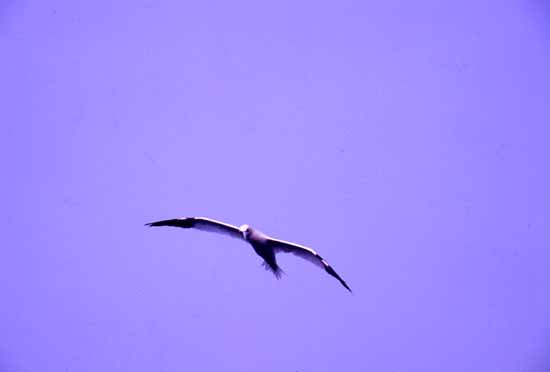
Nada más amanecer ya se empezó a ver grupos de Alcatraces, de diferentes edades, y que nos acompañarían durante el resto de la travesía.
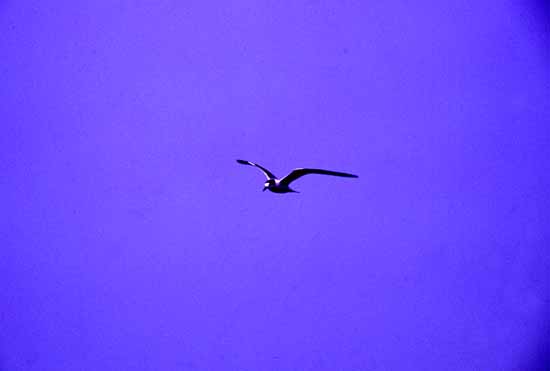


Aparecen barcos arrastreros, con un gran número de aves detrás, Alcatraces, en su mayoría, pero tambíen, Fulmar , Págalo Grande, Charranes. Varios Alcatraces lanzándose en picado en busca de peces.


Las aves siguen apareciendo , Gaviones y Paiños , viendo las diferencias de vuelo entre el Paiño Común y Paiño de Leach

Alguien canta, ...”aleta a las cinco”..., aleta, que confirmó la presencia de un Tiburón Peregrino.

El día se acaba con la llegada a Portsmouth, una ciudad portuaria llena de barcos de guerra y algún antiguo galeón.


Durante este día las especies de aves observadas han sido muy numerosas, destacando las diferentes gaviotas vistas en Portsmoth, Gaviota Cabecinegra, Gaviota Tridáctila, Gaviota Cana, Gaviota Argentea, Gaviota Reidora,...

Otras especies vistas durante este día, , Mosquitero Común, Golondrina Común, Pardelas...



Ya en Portsmouth la inevitable visita a uno de sus Pubs y la cata de sus pintas de cerveza.



Embarcamos de nuevo y al día siguiente se repite el mismo tiempo, sol y algo de viento, este posiblemente más fuerte.

Las aves hacen su aparición, algunas como salidas de la nada, cual patito de goma, vemos Falaropos Picogruesos, a escasos metros del barco. Las Gaviotas de Sabine , primero de lejos, para después encontrar algunas muy cerca.
Pardelas a decenas, Capirotadas, Cenicientas, Pichonetas, Baleares, entre los vuelos de Paiños comunes y alguno de Leach.....Fulmares, Gaviones...todo un recital de aves marinas.


Los mamíferos no quisieron faltar al espectáculo y empezaron a verse Delfines, un salto, dos...diez... cientos de Delfines perpendiculares al barco saltando, Comunes, Listados y Mulares, alguna Marsopa y unos increíbles Peces Luna.


Para rematar las observaciones un grupo familiar de Orcas hace su aparición, con un maravilloso macho mostrando su enorme aleta.


También espectacular se torna el barco de noche, cena , descanso y espectáculos de todo tipo.


El día se acaba y el viaje también, solo queda disfrutar del recuerdo de aves y cetáceos, y como no , de la compañía de un maravilloso grupo de personas, disfrutando de lo lindo de una experiencia única. Gracias a todos.


Lista de Especies

Aves. Bids

ANATIDAE
Cisne Vulgar
Mute Swan Cygnus olor

PROCELLARIIDAE
Fulmar Boreal
Fulmarus glacialis Fulmar
Pardela Cenicienta
Calonectris diomedea Cory's Shearwater
Pardela Capirotada
Puffinus gravis Great Shearwater
Pardela Sombría
Puffinus griseus Sooty Shearwater
Pardela Pichoneta
Puffinus puffinus Manx Shearwater
Pardela Balear
Puffinus mauretanicus Balearic Shearwater

HYDROBATIDAE
Paíño Europeo
Hydrobates pelagicus European Storm-petrel
Paíño Boreal
Oceanodroma leucorhoa Leach's Storm-petrel

SULIDAE
Alcatraz Atlántico
Morus bassanus Northern Gannet

PHALACROCORACIDAE
Cormorán Moñudo
Phalacrocorax aristotelis Shag

ARDEIDAE
Garceta Grande
Egretta alba Great White Egret

FALCONIDAE
Halcón Peregrino
Falco peregrinus Peregrine Falcon

SCOLOPACIDAE
Zarapito Real
Numenius arquata Eurasian Curlew
Andarríos Grande
Tringa ochropus Green Sandpiper
Vuelvepiedras Común
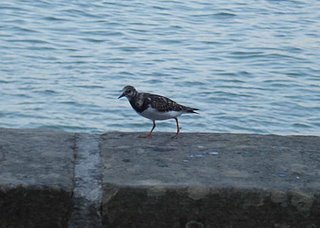
Arenaria interpres Turnstone
Falaropo Picogrueso
Phalaropus fulicarius Grey Phalarope

STERCORARIIDAE
Págalo Pomarino
Stercorarius pomarinus Pomarine Skua
Págalo Parásito
Stercorarius parasiticus Arctic Skua
Págalo Rabero
Stercorarius longicaudus Long-tailed Skua
Págalo Grande
Stercorarius skua Great Skua

LARIDAE
Gaviota Cabecinegra
Larus melanocephalus Mediterranean Gull
Gaviota de Sabine
Larus sabini Sabine's Gull
Gaviota Reidora
Larus ridibundus Black-headed Gull
Gaviota Cana
Larus canus Common Gull
Gaviota Sombría
Larus fuscus Black-backed Gull
Gaviota Argéntea Europea
Larus argentatus Herring Gull
Gaviota Patiamarilla
Larus michahellis Yellow-legged Gull
Gavión Atlántico
Larus marinus Greater Black-backed Gull
Gaviota Tridáctila
Rissa tridactyla Kittiwake

STERNIDAE
Charrán Patinegro
Sterna sandvicensis Sandwich Tern
Charrán Común
Sterna hirundo Common Tern
Charrán Ártico
Sterna paradisaea Arctic Tern
Fumarel Común
Chlidonias niger Black Tern

COLUMBIDAE
Tórtola Europea
Streptopelia turtur European Turtle Dove

ALAUDIDAE
Alondra Común
Alauda arvensis Sky Lark

HIRUNDINIDAE
Golondrina Común
Hirundo rustica Barn Swallow

MOTACILLIDAE
Bisbita Pratense
Anthus pratensis Meadow Pipit
Lavandera Blanca
Motacilla alba White Wagtail

TURDIDAE
Collalba Gris
Oenanthe oenanthe Northern Wheatear

SYLVIIDAE
Zarcero Común
Hippolais polyglotta Melodious Warbler
Mosquitero Común
Phylloscopus collybita Common Chiffchaff

MUSCICAPIDAE
Papamoscas Cerrojillo
Ficedula hypoleuca Pied Flycatcher


Mamíferos, Mammals

Delfín Común
Delphinus delphis Common Dolphin
Delfín Mular
Tursiops truncatus Bottlenose Dolphin
Delfín Listado
Stenella coeruleoalba Striped Dolphin
Rorcual Común
Balaenoptera physalus Fin Whale
Rorcual Aliblanco
Balaenoptera acutorostrata Minke Whale
Marsopa
Phocaena phocaena Harbour Porpoise
Orca
Orcinus orca Killer Whale
Zifio de Cuvier
Ziphius cavirostris Cuvier's Beaked Whale


Peces, Fish

Tiburón peregrino
Cetorhinus maximus Basking shark

Pez Luna Mola Mola Ocean Sunfish


You can find more information about the birds, dolfins and whales of the Biscay Gulf in the Biscay Dolphin Research Programme
Saturday, September 16, 2006

Sings of migration


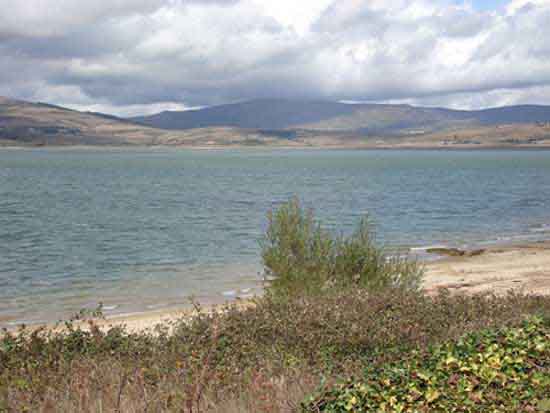
Reservoir of the river Ebro

A good birding day, from the Molino del Canto Inn, we have crossed the zone of moors and valleys to the reservoir of the river Ebro.
The migration is very evident, mainly of passeriformes, in the trees of the banks of the rivers, the abundance of Spotted Flycatcher (Muscicapa striata) , Pied Flycatcher (Ficedula hypoleuca) and the Willow Warbler (Phylloscopus trochilus) , is very showy.
Other observed species:
Robin (Erithacus rubecula)
Great Spotted Woodpecker (Dendrocopos mayor)
Green Woodpecker (Picus viridis)
Blackcap (Sylvia atricapilla)
Dunnock (Prunella modularis)
Great Tit (Parus major)
Blue Tit (Parus caeruleus)

Common Kestrel (Falco tinnunculus) and Lesser Kestrel (Falco naumanni), mousy common are easy to observe in the moors, reservoir and the environs the following species have been observed.
Four various species of Ducks.
Mallard (Anas platyrhynchos) great number of birds, present in all reservoir, in great groups or lonely birds.
Gadwall (Anas strepera), in a little groups with near of twenty birds.
Red-crested Pochard (Netta rufina),only two birds.
Common Pochard (Aythya farina), a male and female in a group of Mallard.
Little Grebe (Tachybaptus ruficollis) four birds in the middle of the reservoir.
Great Crested Grebe (Podiceps cristatus) a lot of birds distributed for all reservoir.


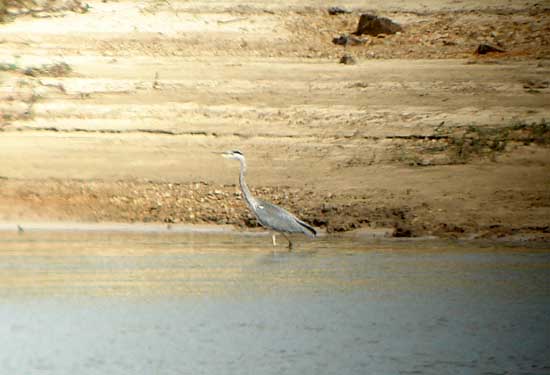
Grey Heron (Ardea cinerea)

Only one specie of heron the Grey Heron (Ardea cinerea), in the edges.
Black-headed Gull (Larus ridibundus) in more number of birds that the Yellow-legged Gull (Larus michahellis).
Waders, Common Sandpiper (Actitis hypoleucos), Green Sandpiper (Tringa ochropus) and a Redshank that I did not manage to identify.
Eurasian Sparrowhawk (Accipiter nisus) a bird in flight.
A lonely Barn Swallow (Hirundo rustica), probably the last of this year.
Common Stonechat (Saxicola torquatus)
White Wagtail (Motacilla alba)
Common Chaffinch (Fringilla coelebs)
Common Starling (Sturnus vulgaris)
Spotless Starling (Sturnus unicolor)
Magpie (Pica pica)
Carrion Crow (Corvus corone)
Common Raven (Corvus corax)

Tuesday, September 12, 2006

Lesser kestrels searching food

As other years now it is possible to observe in the region of Bricia (Burgos province) and the environs of the reservoir of the river Ebro, groups of Lesser kestrels (Falco naumanni), that move of their habitual breeding areas towards zones where the abundance of grasshopper seems to be that he is greater.
It is easy to observe groups not very numerous, 8, 12... looming, perched or to fly around by zones of low vegetation, arable lands, fallow lands... in search of his food.

Wednesday, September 06, 2006

The Higuer Cape


The one of cape of Spanish North coast, yesterday a European Shag (Plalacrocorax aristotelis), Yellow-legged Gull (Larus michahellis), Sandwich Tern (Sterna sandvincensis), and a group of eight Turnstone (Arenaria interpres), these feeding in the prom on Hondarribia, and without fear to people. In migratory pass various groups of Northern Gannet (Morus bassanus).


This cape is one of which they are within RAM program .

RAM (Red de Aves Marinas) is a Spanish Seabird Monitoring Network based on the north and northwest Spanish coast. You can find more information HERE.

Friday, August 25, 2006

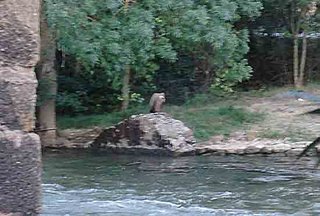
A Juvenile Griffon Vulture


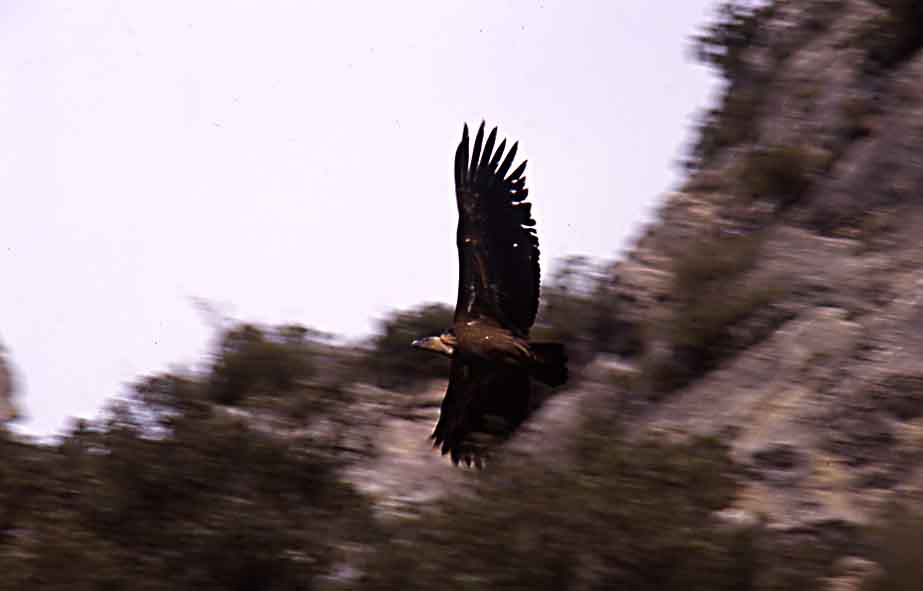
Every year, usually is normal to see juvenile of Griffon Vulture (Gyps fulvus), that they are undernourished and they fall to the ground, in places where soon it is very difficult to them to overcome the flight.
This undernourishment must mainly to the lack of food, so that they do not find the juvenile birds of easy form.
Thus we were every year with birds in the most unsuspected places, in the trees of the shore, upon a stone next to the river, in roads..., birds that, in many cases, let themselves take since they do not have forces to escape.
In this case a juvenile of Griffon Vulture, to fallen to the border of the river, and to passed everything afternoon to get on a stone.

Sunday, August 20, 2006

New report of the Yearbook

The new report of the more interesting birds can already be consulted that the birders of Burgos have seen during last the three months, April, May and June.
Second report of the Yearbook of the Birds of Burgos

In this new report the observations is remarkable the breeding of Grey Heron (Ardea cinerea), and the records of Ruddy Shelduck (Tadorna ferruginea), three records of Lammergeier (Gypaetus barbatus), Whiskered Tern(Chlidonias hybrida),
Black Woodpecker(Dryocopus martius), Wallcreeper (Tichodroma muraria) and more...

You can find the first report for the January, February and March, Here

Thursday, August 17, 2006

I and the Bird #30 by Burning Silo

I and the bird #30

Thursday, August 03, 2006

I and the Bird #29 by Alis Volat Propiis

I and the Bird #29

Thursday, July 27, 2006

Wonderful Visitors


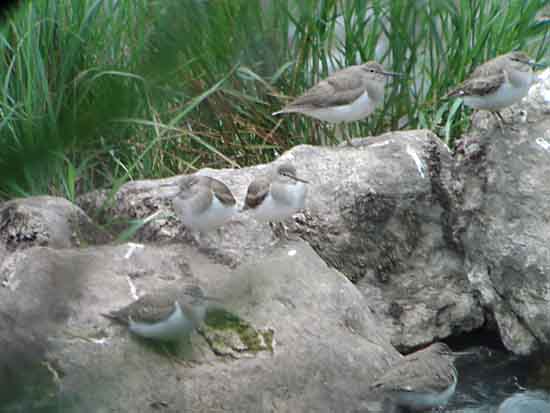
This week we have had the visit of a group of 13 Common Sandpiper (Actitis hypoleucos) , that are been spending several nights, resting in the dam of the Mill, the group this made up of several adults and juveniles birds.
Not very often so numerous groups of this species see themselves.

The Common Sandpiper are one of the species of waders more common in the Iberian Peninsula interior, very being bound to the watercourse.
His identification is simple, in adult in breeding plumage, brown upperparts; tertials, scapulars and wing coverts have dark brown shaft streaks and bars, with buff tips. Bill dark brown. Legs usually greenish-grey. The juvenile plumage is similar to non-breeding plumage in adults, mantle and scapular feathers are a warm brown, with shaft streaks and subterminal lines.


Junenile and Adult mantle plumage

His behavior also is very characteristic.
Teeters constantly, habitually bobbing its head and pumping the rear part of the body up and down.
In flight they make alternating bursts of stiff wing-beats and short glides, just above the surface of the water, with bowed wings.


During these days that are been this way have by day been during long time emitting as much as at night one of their classic calls.

Sunday, July 23, 2006

The Juveniles Birds

As I already commented in my previous post, it is time to see mainly juveniles of the different species of birds, yesterday after a route by the center of the “Las Merindades “, were possible to be observed quite a lot species.
The presence of juvenile birds, with its plumages different from the adult was remarkable, Great Tit (Parus major) , European Stonechat (Saxicola torquata) , Whinchat (Saxicola rubetra) , House Martin (Delichon urbicum) ,Barn Swallow (Hirundo rustica), Finches....
One of the most spectacular juveniles birds was the Egyptian Vulture (Neophron percnopterus), a totally black juvenile, very different from the adults, also the head differs in the color, yellow in the adult and bluish in the juvenile.
In a distance, a inexperienced observer, can to mistake by Black Vulture.


A juvenile birds of Goldfinch, Coot and Egiptian Vulture

Thursday, July 20, 2006

I and the Bird #28 by Bogbumper

I and the Bird #28

Sunday, July 16, 2006

"Easy Path of Castilla y León"


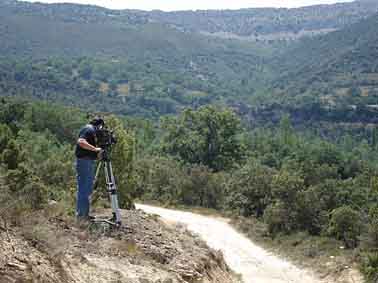
This week the TVE (Spain television) is been recording an interview, in the Inn, the author of the book “SENDEROS FÁCILES POR CASTILLA Y LEÓN", Javier Prieto, a book on routes and ways of Castile and León .


Among the outstanding routes one is a very near one the Molino del canto Inn, the one that runs by the Canyon “Los Tornos”, and that begins in the village of Tudanca.
In a future post I will describe this route of detailed form more.
It is a section of the GR85 that crosses great part of the north of Burgos province.


They have arrived at the zone to take images from the route for the small accomplishment from a documentary one, and have made some interviews, a pair of them to the own author of the book and another they did me my, in relation to the species of birds that live and that can be observed in this zone of the north of Spain.
The birds that could be observed during the route, were mainly Griffon Vultures (Gyps fulvus), although also the rest of the species was seen an Egyptian Vulture (Neophron percnopterus), were forest, Tits, Wagtails, Western Bonelli’s Warbler (Phylloscopus bonelli), but it is already very evident that the birds have been stop sing as intensely as for some weeks, now easiest to see and to listen it is to great amount of young birds of different species, persecuting from the parents so that they give food them.
By this it is a good moment to be able to observe the different types from plumage that have the birds with youthful age, sometimes very different from the plumage of the adults.

Friday, July 07, 2006

The Jay (Garrulus glandarius)

The other day my girl found a Jay (Garrulus glandarius) died in the road, something commonest of that we can imagined, it is difficult to know the number of birds that die in the highways of Europe, but surely that is elevated.
It is not easy to observe the Jays in the forests, is an evasive bird, which does not let itself see much, but if to listen, in a small route by any forest it is easy to listen to several times the rough calls of these birds.
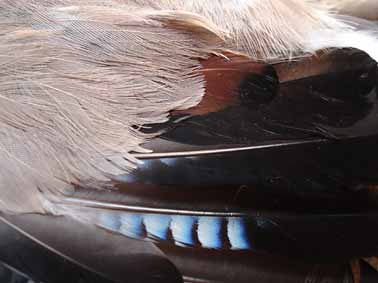
Although it is not the first time, I could again observe with detail the wonderful characteristics of the plumage of the Jay, emphasizing the primary coverts, feathers without a doubt of prettiest of the European birds.


Primary coverts

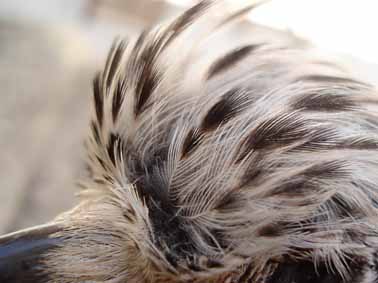
Also she observes in the head the feather of the crown, same that raises as a crest, and the characteristic moustache support.


Crest

Other spectacular feather are the tertials , of colour it rusts and those of colour salmon of the mantle.


Mantle of Jay


Tertials

As it is possible to be seen, a so common bird but simultaneously one of the birds more spectacular than lives in the environs.
It is easy to observe like at time of nuts, the Jays gather nuts of the trees later to bury them in places where they to think that they will remember, but the recoveries of buried nuts are small.
This the best friend of the forest does of the Jay.


walnut tree born under yew tree


Distribution of Jay in the Burgos province.
Map of the book: Atlas de las Aves Nidificantes de la Provincia de Burgos.Román, J., Román, F., Ansola, L.M., Palma, P., Ventosa, R.. (1996)

Thursday, July 06, 2006

I and the Bird #27 by 10,000 Birds

I and the Bird #27

Friday, June 30, 2006

Windfarms

The last news on the collisions of birds in the windfarms are terrible, many White-tailed Eagle
died in Norway, Golden Eagles in Scotland (article) and here in Spain, they do not stop of news about dead of Eagles and Vultures.
The bad location of this type of energy is taking to a serious environmental problem, with one serious incidence in the populations of birds, many of these already threatened and in serious danger.
Even so this type of energy generation is continued with publicity like energy that respects the environment, something that this very far from the reality.
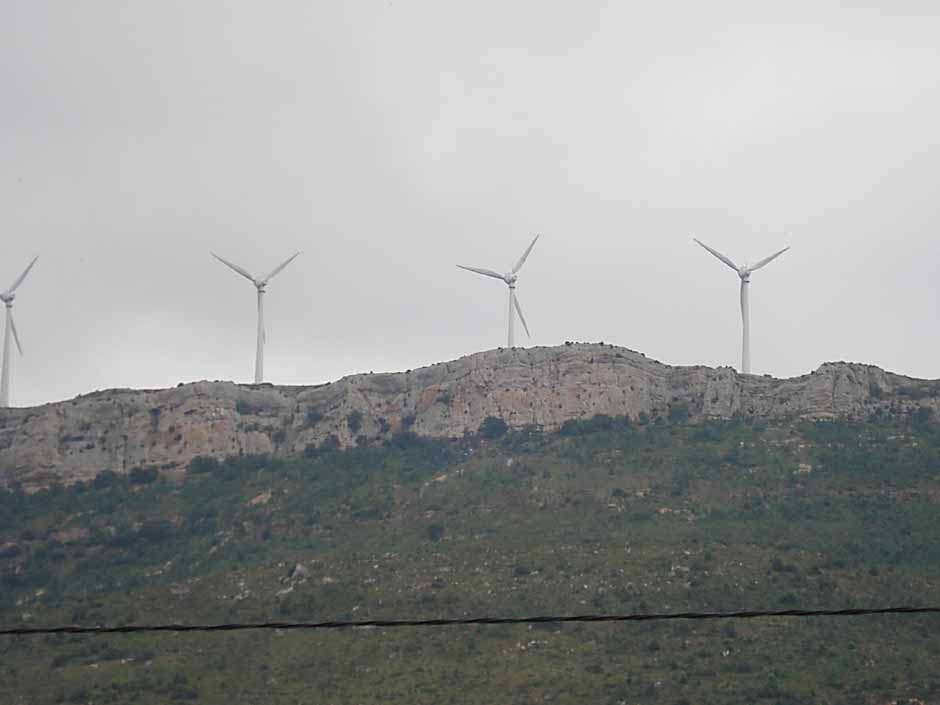
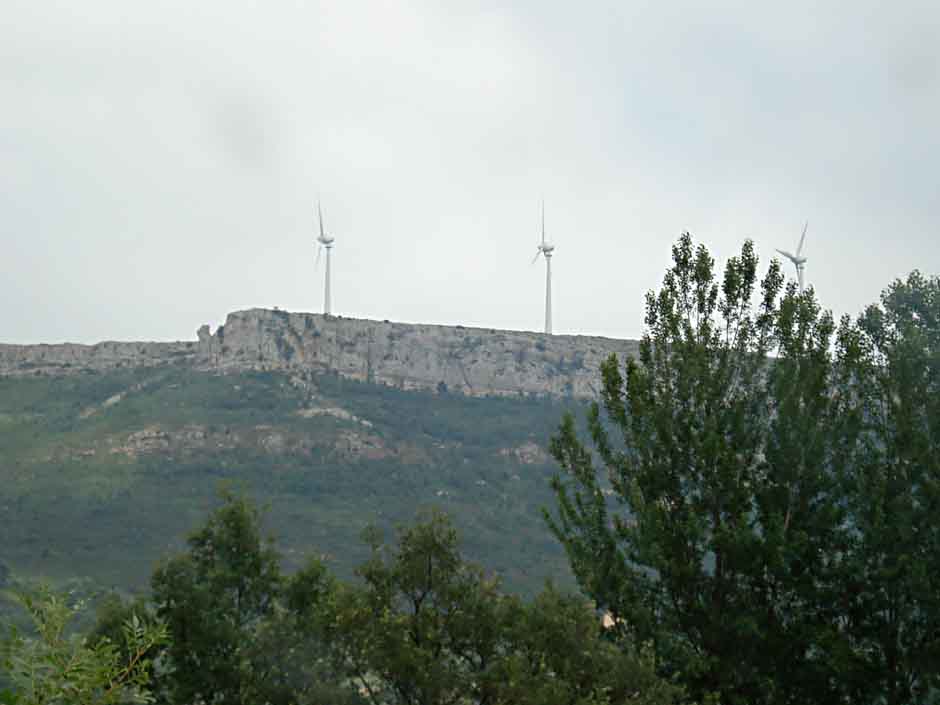
Here in the north of Spain the windfarms location cannot be more ominous, just in mountain summits, where the Griffon Vultures, and Eagles finds the currents thermal that they use in his flights.
In other cases these are in migratory routes where the collisions are frequent.
In 1970, the Griffon Vulture was in clear regression, is very possible that this situation we return it to live, single that now, with the destruction of its environment the recovery will be impossible.
A clear disappearance of the Egyptian Vulture is already being seen.
To the problems that produce the windfarms we can add the disappearance of the carrion of cattle origin that before found these birds.

You can find articles about the birds and windfarms in

iberica 2000.org

Wednesday, June 28, 2006

The SACRE Program II

After making the second route to the grids that I have assigned, it’s to make up books of the found species.
The routes have been made with good weather.
In grid VN44 I have located 62 different species and in the VN34, 54 were located, a clear difference because in the VN44 there is more variety of habitats and this is equivalent to a greater diversity of species.
Altogether 71 different species have been located, being located, the Common Cuckoo, excepting an observation of a concentration of approximately 100 Common Swift, as if they were in migration.
Birds that have been located for the first time:
Black-winged Stilt
Common Quail
Lesser Spotted Woodpecker
Wood Lark
Spectacled Warbler

In grid VN44 stays within the values of other years with maximums of 65 and minimum of 51.

SACRE program

Thursday, June 22, 2006

I and the Bird #26 by The Hawk Owls' Nest

I and the Bird #26

Tuesday, June 20, 2006

About Swifts, House Martins & Swallows

The past day 05/26/2006 in Birds in the North of Spain , this post made reference to one of the more specialist birds, the Common Swift.
Along with the House Martins and Swallows have been of the birds that more near the man live, and have come using for many years the human constructions to nest.
But now its future is uncertain, and the last studies indicate that their populations are lowering in all Europe (for further details here), mainly seems that by the agricultural changes and changes in their habitual places of nest.

In the construction of new buildings or the reconstruction or renovation of the old, one does not consider, that this being avoided that these birds nest.
New systems of roofing tiles, elimination of eaves, closing of attics...., all this do that these birds do not find good places of nest between us.
For that reason we must make an effort and to try that, when you are made east type of works install new systems that allow to the installation of these birds and their conservation. You can find information about the diferents SCHWEGLER systems here Flyer (PDF)
If some summer we do not return to listen to the precious sound of the Common Swifts, will be the saddest summer.

More information in:
http://www.charliesbirdblog.com/ (June 13 2006: Conservation of Common Swifts...)
London's Swifts Homepage


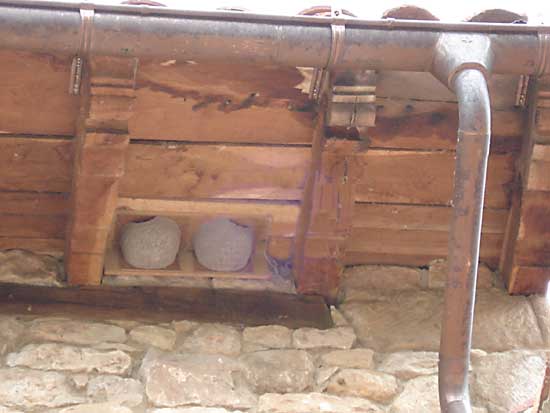
House Martin double nest of Schwegler in the eaves of the Molino del Canto Inn

Friday, June 16, 2006

The birds from the Garden III

The Great Tit and Blue Tit begin more continuously to use the feeders, by which they see themselves with more assiduity.

Under the feeders isn’t difficult to find Common Chaffinch and Greenfinch, gathering the seeds of the ground
.
One becomes to listening to the Iberian Chiffchaff, and from time to time to listen the Common Chiffchaff .
Wren and Blackcap, easily locatable in the thickness of the shrubs.
On the trunks of the trees, the Short-toed Treecreeper and its acute call. And like specially showy bird that visits the garden every year, Common Redstart, a precious male singing searching a female.