Showing posts with label Buntings. Show all posts

Sunday, May 22, 2011

Through of nature reserve

A new tour through the Parque Natural de las Hoces del Alto Ebro y Rudrón nature reserve looking for birds. A new birders enjoyed of the birds of northern Burgos.
 Birding in the canyons

57 species. The more remarkable records: four Hen Harriers, one Peregrine Falcon attacking to Common Buzzard, a pair of Honey Buzzard, flying over the village of Presillas. European Turtle Dove, Common Quail and four species of Buntings, Corn, Cirl, Rock and Yellowhammer.

Checklist of the day 

European Honey-buzzard
Black Kite
Egyptian Vulture
Griffon Vulture
Hen Harrier
Common Buzzard
Common Kestrel
Peregrine Falcon
Common Quail
Wood Pigeon
European Turtle Dove
Common Cuckoo
Common Swift
Alpine Swift
Green Woodpecker
Woodlark
Skylark
Crag Martin
House Martin
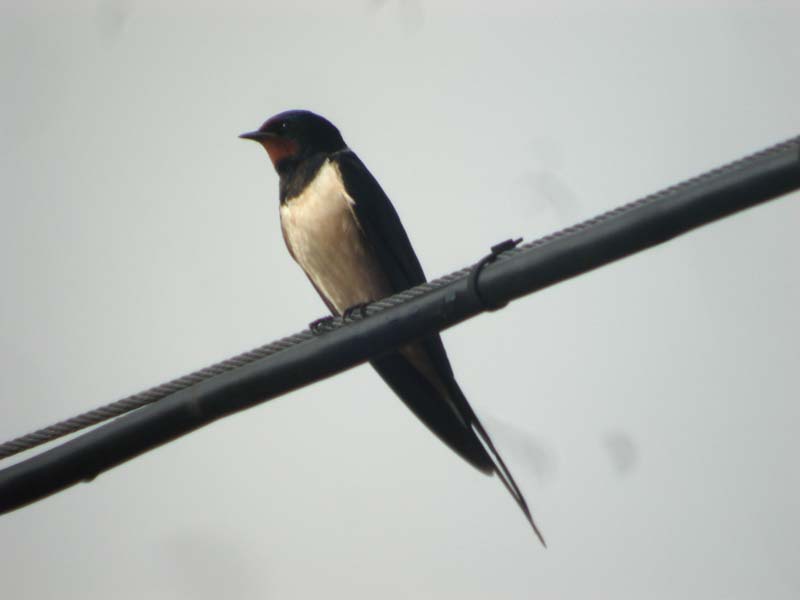
Barn Swallow
Twany Pipit
Tree Pipit
White Wagtail
Grey Wagtail
Wren
Dunnock
Robin
Black Redstart
Common Redstart
Common Stonechat
Northern Wheatear
Blackbird
Song Thrush
Mistle Thrush
Common Whitethroat
Blackcap
Bonelli's Warbler
Iberian Chiffchaff
Firecrest
Spotted Flycatcher
Coal Tit
Blue Tit
Jay
Magpie
Carrion Crow
Raven
Spotless Starling
House Sparrow
Rock Sparrow
Common Chaffinch
European Serin
Linnet
Common Bullfinch
Yellowhammer
Cirl Bunting
Rock Bunting
Corn Bunting
Northern Wheatear

 House Sparrow
Barn Swallow

Thanks to Chad and Janet by their interest in the birds of Burgos, two good new birders.
 

Thursday, April 02, 2009

A trip report


A good morning of birdwatching in the vicinity of the Inn, in the meadows fields to see Mistle Thrush searching earthworm, Robins, Common Chaffinch and Firecrest does not stop to sing from the Oaks.
Four Roe Deer leave running, while a Common Buzzard is thrown in search of its prey from a tree.
A Grey Heron on an unusual perching, at the top of a black poplar.
Stop to observe the rocky wall, locating to a precious female of Peregrine Falcon, a while a Short-toed Eagle flies over the zone to settle in a rocky one. Several Griffon Vultures settle and fly by the zone.

A flock of 36 Great Cormorants flying in formation towards the north.
In the bank of the river, among the alders and ashes, the Iberian Chiffchaff with its characteristic voice.
The Egyptian vultures, just arrived from Africa, with their spectacular plumage, emphasize among the Griffon Vultures. To far a Golden Eagle it flies near the cut ones, one settles in a dry tree and it allows us to observe it easily.

In the canyon of Orbaneja del Castillo they appear the Egyptian vultures again, several Black Kite and the omnipresent Griffon Vultures.
Wood Pigeon, Jackdaw, Yellowhammer.
Once again a Grey Heron surprises when being perching at the top of the rocky of the canyon of river Ebro.
Altogether 26 species of birds in a pretty morning of spring.

Thanks to Beatriz, César, Daniel and Borja for their interest in the birds of Burgos

Tuesday, March 24, 2009

Lagoon of Miranda de Ebro


The province of Burgos is not characterized to have many wetlands, but the few that it has are really interesting.
One of that I have followed since I began with birdwatching is the lagoon complex next to the city of Miranda de Ebro.
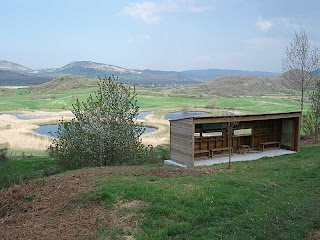
Three small lagoons very next to the city and surrounded by highways, but that even so are able to lodge a good amount of species of birds. Luckily, from year 2002 a good sum of money has been reversed to prepare them, and now one of them has an observatory.
These lagoons were on the verge of disappearing, as it happened with other many in Spain, used like tip, burned the vegetation…
Now it is possible to be enjoyed a good number of birds and the proximity to the city causes that they are possible to be used by the schools to bring back to consciousness to the children and to teach to them to the importance of the water, wetlands and birds.
The other day in a two hours I could see the next birds:

Mallard
Northern Shoveler
Common Buzzard
Great Cormorant
Eurasian Coot
Common Moorhen
Corn Bunting
Common Red Bunting (3)
Marsh Harrier (1)
Common Snipe (16)
Barn Swallow
Cetti’s Warbler
Magpie
White Stork
European Greenfinch


Wednesday, February 18, 2009

Atlas in VN3040

The past week I finished the census in the last square for the Atlas of wintering birds .
In this grid I have been able to observe a lot of forest birds, more variety of species and number of birds that in the two previous squares.
The first routes in an Oak forest and pine and the last routes I walk on arable land.
The weather has been excellent, reason why also it can have been this one of the causes by which I have detected more birds.
Reviewing the species of the squares, (VN2050, VN3060)one can to get come idea of the birds that can be found in the northwest of Burgos in winter.
Between that I have seen, they emphasize a lot of Goldcrest, a scarce bird in this area, unlike Firecrest, much more common in any time of the year.
Also there was a good number of Bullfinch.
Although they do not enter within the census, I saw first flocks of Geese going towards the North, altogether 300 birds.
This, along with the first songs of Wren, Great Tit, and Woodpeckers, nuptial flights of Vultures, the first Swallows and House Martins…, confirm that the breeding season is ready.
Birds observed in the 20 routes of square VN 3040
Griffon Vulture, Common Buzzard, Eurasian Sparrowhawk, Common Kestrel, Great Spotted Woodpecker, Green Woodpecker, Coal Tit, Great Tit, Blue Tit, Goldcrest, Firecrest, Long-tailed Tit, Song Thrush, Blackbird, European Robin, Wren, Common Chaffinch, Bullfinch, European Nuthatch, Short-toed Treecreeper, Skylark, White Wagtail, Yellowhammer, House Sparrow, Red-billed Chough, Carrion Crow, Jay.

Wednesday, January 21, 2009

Census of Great Bustard II

The morning has left very pretty, almost cleared and without frost, there was 1.5ºC when we began the census to 9.00h.
No wind and the visibility was wonderful, in the majority of the flocks has been possible to know the sex of the birds.

Hoping to finish analyzing the collected data, we can indicate that the amount of wintering Great Bustards in the region the west of the province of Burgos is at least 266 birds, 27 more than the last year.


Photo by José Pedro Portillo


An equipment that has looked for Great Bustards in the province of Palencia, to the other side of the river Pisuerga and it has not found any, this is also an important data.

Photo by José Pedro Portillo


But not only it has been to count Great Bustards, the different equipment has been able to enjoy the tremendous number of raptors that there is in the zone, mainly Common Kestrels, Common Buzzard and Red Kite, but also has been able to observe Peregrine Falcon, Merlin, many Hen Herriers and some Marsh Harrier.
The cold of this week also have been let notice in the cereal plain of the region in the form of great flocks of Lapwings, with very few Golden Plover.
Other birds of the area, Skylark, Calandra Lark, Crested Lark, Corn Bunting, Cirl Bunting, Finches….

Also they have been mammalian, one of the equipment some thirty Roe Deer and another equipment a Fox.

The Birders

Information about the first census Here.

Friday, May 09, 2008

Breeding Bird Survey . Square VN3040

My second square- VN 3040- for the Breeding Bird Survey
has reported a total of 48 different species of birds, a number similar to other years and to the other squares that I make, VN 4040, a number of birds that can seem small, but this is obtained in only four hours and by habitats little varied.

In this second square, again the river Ebro and the moor is the principal habitats, although the cliffs of the canyons of limestone are very abundant.

Again, several migratory birds that have arrived, in this square have been seen are outstanding the Common Swift and Alpine Swift, this one an amazing bird.

1.Black Kite (Milvus migrans)
2.Common Buzzard (Buteo buteo)
3.Great Tit (Parus major)
4.Blue Tit (Parus caeruleus)
5.Coat Tit (Parus ater)
6.Wood Pigeon (Columba palumbus)
7.Great Spotted Woodpecker (Dendrocopos major)
8.Green Woodpecker (Picus viridis)
9.Common Cuckoo (Cuculus canorus)
10.Dunnock (Prunella modularis)
11.Carrion Crow (Corvus corone)
12.Magpie (Pica pica)
13.Jay (Garrulus glandarius)
14.Wren (Troglodytes troglodytes)
15.Song Thrush (Turdus philomelos)
16.Mistle Thrush (Turdus viscivorus)
17.European Robin (Erithacus rubecula)
18.Blackbird (Turdus merula)
19.Black Redstart (Phoenicurus ochruros)
20.Firecrest (Regulus ignicapillus)
21.Blackcap (Sylvia atricapilla)
22.Garden Warbler (Syvia borin)
23.Ibarian Chiffchaff (Phylloscopus ibericus)
24.Bonelli´s Warbler (Phylloscopus bonelli)
25.Eurasian Bullfinch (Pyrrhula pyrrhula)
26.European Serin (Serinus serinus)
27.European Greenfinch (Carduelis chloris)
28.European Goldfinch (Carduelis carduelis)
29.Common Chaffinch (Fringilla coelebs)
30.Short-Toed Treecreeper (Certhia brachydactyla)
31.Rock Sparrow (Petronia petronia)
32.House Sparrow (Passer domesticus)
33.Eurasian Golden Oriol (Oriolus oriolus)
34.Common Swift (Apus apus )
35.Alpine Swift (Apus melba)
36.Common Skylark (Alauda arvensis)
37.White Wagtail (Motacilla alba)
38.Grey Wagtail (Motacilla cinerea)
39.Tree Pipit (Anthus trivialis)
40.Spotless Starling (Sturnus unicolor)
41.Cirl Bunting (Emberiza cirlus)
42.Yellowhammer (Emberiza citrinella)


Friday, December 21, 2007

Atlas of Wintering Birds. VN2050

Again I have been able to make a new one square for the Atlas of wintering birds, the VN2050 and again I have been able to enjoy a day of birdwatching, without a doubt this type of bird works becomes an incentive to follow with the birding.

This routes into squares is located under the reservoir of the river Ebro, these have a influence in the presence of birds in to the square.


It is a cattle zone and is characterized by the abundance of pastures, and is in these zones where more diversity of birds we can found.
In winter flocks of birds, they move by all the area.


Also wooded areas exist, mainly composed by Oak and Beech trees, in this type of forests the tits, treecrepers, woodpeckers… are the easy ones to find. Although today I did not have luck, is not difficult to see Black Woodpecker.


List of species recorder in the routes:
1. Northern Lapwing, Vanellus vanellus , two flocks in the pastures 2. Common Snipe, Gallinago gallinago , two birds in a water area in the pastures 3. European Golden Plover, Pluvialis apricaria 4. Great White Egret, Egretta alba , two birds on the pasture area 5. Grey Heron, Ardea cinerea 6. Mallard, Anas platyrhynchos 7. Great Crested Grebe, Podiceps cristatus 8. Common Kestrel, Falco tinnunculus 9. Common Buzzard, Buteo buteo 10. Red-billed Chough, Pyrrhocorax pyrrhocorax 11. Eurasian Jay, Garrulus glandarius 12. Carrion Crow, Corvus corone 13. Common Raven, Corvus corax 14. Magpie, Pica pica 15. Cirl Bunting, Emberiza cirlus 16. Yellowhammer, Emberiza citrinella 17. Rock Bunting, Emberiza cia 18. Sky Lark, Alauda arvensis 19. Common Starling, Sturnus vulgaris 20. Spotless Starling, Sturnus unicolor 21. Dunnock Prunella modularis 22. Meadow Pipit, Anthus pratensis 23. White wagtail, Motacilla alba 24. Robin, Erithacus rubecula 25. Blackbird, Turdus merula 26. Song Thrush, Turdus philomelos 27. Fieldfare, Turdus pilaris 28. Redwing, Turdus iliacus 29. Mistle Thrush Turdus viscivorus 30. Firecrest, Regulus ignicapilla 31. Short-toed Treecreeper, Certhya brachydactyla 32. European Nuthatch, Sitta europaea 33. Green Woodpecker, Picus viridis 34. Long-tailed Tit, Aegithalos caudatus 35. Great Tit, Parus major 36. Blue Tit, Parus caeruleus 37. Common Chaffinch, Fringilla coelebs 38. Brambling, Fringilla montifringilla , flock with 30 birds near of the village of Santa Gadea 39. Goldfinch, Carduelis carduelis 40. Common Bullfinch, Pyrrhula pyrrhula 41. Zitting Cisticola, Cisticola juncidis, four birds near of the river 42. House Sparrow, Paser domesticus 43. Greylag Goose, Anser anser, 18 birds flying towards the south 44. Common Crane, Grus grus 2 birds flying towards the south.


Wednesday, December 05, 2007

Atlas of Wintering Birds. VN3040.

Square VN3040, composed mainly by high land, a fluvial canyon formed by the river Ebro and a valley very closed by the oaks.


I have made the 20 routes of season 2007, in two days.

The first day 11 routes and second 9.

The time has been very good, with temperatures between 0 and 10ºC with sky overcast by high fog that soon has cleared leaving a spectacular sun.

With respect to the records of birds, both days have been very good, with a great variety of species and flocks of birds.

The total number of species recorder has been of 46.

The species with more birds, Common Chaffinch.

The species with interesting records.
-Golden Plover three birds with a Northern Lapwing flock.


-Goldcrest, is necessary to remember that, in Spain, the distribution of Goldcrest is smaller than the Firecrest, reason why always are interesting the contacts with this species.


Maps of distribution of Goldcrest (left) and Firecrest , in Europe.


Maps by COLLINS BIRD GUIDE. THE MOST COMPLETE FIELD GUIDE TO THE BIRDS OF BRITAIN AND EUROPE , Mullarney K. & Svensson L


Very interesting also the records of flocks of Fieldfare and Redwing.

The list of birds recorder.

1.Great Cormorant Phalacrocorax Carbo
2.Griffon Vulture Gyps fulvus
3.Common Buzzard Buteo buteo
4.Common Kestrel Falco tinnunculus
5.Northern Lapwing Vanellus vanellus, 60
6.European Golden Plover Pluvialis apricaria, 3
7.Common Woodpigeon Columba palumbus
8.Great Spotted Woodpecker Dendrocopos major
9.Green Woodpecker Picus viridis
10.Skylark Alauda arvensis
11.White Wagtail Motacilla alba
12.Blackbird Turdus merula
13.Mistle Thrush Turdus viscivorus
14.Fieldfare Turdus pilaris, >50
15.Song Thrush Turdus philomelos
16.Redwing Turdus iluacus, three flocks 20, 12, 15
17.Robin Erithacus rubecula
18.Great Tit Parus major
19.Blue Tit Parus caeruleus
20.Coal Tit Parus ater
21.Wren Troglodytes troglodytes
22.Dipper Cinclus cinclus
23.Short-toed Treecreeper Certhia brachydactyla
24.European Nuthatch Sitta europaea
25.Linnet Carduelis cannabina
26.Common Chaffinch Fringilla coelebs
27.Greenfinch Carduelis chrolis
28.Siskin Carduelis spinus
29.Common Bullfinch Pyrrhula pyrrhula
30.Rock Bunting Emberiza cia
31.Cirl Bunting Emberiza cirlus
32.Yellowhammer Emberiza citrinella
33.Corn Bunting Emberiza Calandra
34.Cetti’s Warbler Cettia cetti
35.Blackcap Sylvia atricapilla
36.Goldcrest Regulus regulus, 1
37.Spotless Starling Sturnus unicolor
38.Common Starling Sturnus vulgaris
39.Southern Grey Shrike Lanius Meridionalis, 1
40.House Sparrow Passer domesticus
41.Rock Sparrow Petronia petronia
42.Red-billed Chough Pyrrhocorax pyrrhocorax >50
43.Jay Garrulus glandarius
44.Carrion Crow Corvus corone
45.Magpie Pica pica
46.Raven Corvus corax

Friday, April 27, 2007

Lagoons


Great number of migratory birds has arrived, in a stroll by the lagoons of Gayangos it is possible to see and to listen many of these birds.
The lagoons of Gayangos conform one of the few wetlands of the province of Burgos.
They are composed by three main lagoons and other than is stationary because it is dried at times of summer.
In these lagoons it is possible to find great number of species of birds, being the most showy aquatic birds, Ducks, Grebes, Rails…and those that live related to the wetland plants, Cetti’s Warbler, Great Reed Warbler….

Garganey

Several of the birds that live in the wetlands plants are difficult to detect if it is not by means of the voice.
In the environs of the lagoons it is possible to see other many species of birds, Buntings, Stonechats, Finches, Kites, Storks

Corn Bunting

Whinchat
Now, with the new observatory, it is possible to take refuge the days of bad weather.