Showing posts with label Grebes. Show all posts

Tuesday, November 29, 2011

Ebro dam and Bricia area


Wheatear in migration southwards

Another birding day, in the area of Ebro dam, 39 species in a bad birding day. The previous day it seemed that the weather would be good, but the day of birding an incessant wind I will make difficult the observations of birds.
Records of Buntings, Cirl Bunting and Yellowhammer in the region of Bricia. Skylarks, woodlarks, Pipits, Common Kestrels and a good number of Common Buzzards in the Arija pastures.
Ducks, Black-necked Grebe, Great Grebe and Gulls in the dam.

Thanks to Miguel and Alberto Robles by their interest in the birds of Burgos.

Thursday, February 10, 2011

Egret and Curlew

Little Owl 

Great White Egret 

Great Cormorant 

Black-necked Grebe 

Common Coot 

Eurasian Curlew

Trip by the county of Bricia and Southern area of water reservoir of river Ebro.
Little Owl, Buntings, Buzzards... in the moor of county of Bricia an highlands with 1000 meters above sea level.
In the water reservoir, Grey Heron, Great White Egret, flocks of Common Coot, Eurasian Curlew, Lapwing, Mallard.... all in the pasture, meadow areas and the areas of low level water. Yellow-legged Gull, Black-headed Gull, Cormorants and Grebes in the open water.
All with good weather and waiting the Spring.

Friday, December 21, 2007

Atlas of Wintering Birds. VN2050

Again I have been able to make a new one square for the Atlas of wintering birds, the VN2050 and again I have been able to enjoy a day of birdwatching, without a doubt this type of bird works becomes an incentive to follow with the birding.

This routes into squares is located under the reservoir of the river Ebro, these have a influence in the presence of birds in to the square.


It is a cattle zone and is characterized by the abundance of pastures, and is in these zones where more diversity of birds we can found.
In winter flocks of birds, they move by all the area.


Also wooded areas exist, mainly composed by Oak and Beech trees, in this type of forests the tits, treecrepers, woodpeckers… are the easy ones to find. Although today I did not have luck, is not difficult to see Black Woodpecker.


List of species recorder in the routes:
1. Northern Lapwing, Vanellus vanellus , two flocks in the pastures 2. Common Snipe, Gallinago gallinago , two birds in a water area in the pastures 3. European Golden Plover, Pluvialis apricaria 4. Great White Egret, Egretta alba , two birds on the pasture area 5. Grey Heron, Ardea cinerea 6. Mallard, Anas platyrhynchos 7. Great Crested Grebe, Podiceps cristatus 8. Common Kestrel, Falco tinnunculus 9. Common Buzzard, Buteo buteo 10. Red-billed Chough, Pyrrhocorax pyrrhocorax 11. Eurasian Jay, Garrulus glandarius 12. Carrion Crow, Corvus corone 13. Common Raven, Corvus corax 14. Magpie, Pica pica 15. Cirl Bunting, Emberiza cirlus 16. Yellowhammer, Emberiza citrinella 17. Rock Bunting, Emberiza cia 18. Sky Lark, Alauda arvensis 19. Common Starling, Sturnus vulgaris 20. Spotless Starling, Sturnus unicolor 21. Dunnock Prunella modularis 22. Meadow Pipit, Anthus pratensis 23. White wagtail, Motacilla alba 24. Robin, Erithacus rubecula 25. Blackbird, Turdus merula 26. Song Thrush, Turdus philomelos 27. Fieldfare, Turdus pilaris 28. Redwing, Turdus iliacus 29. Mistle Thrush Turdus viscivorus 30. Firecrest, Regulus ignicapilla 31. Short-toed Treecreeper, Certhya brachydactyla 32. European Nuthatch, Sitta europaea 33. Green Woodpecker, Picus viridis 34. Long-tailed Tit, Aegithalos caudatus 35. Great Tit, Parus major 36. Blue Tit, Parus caeruleus 37. Common Chaffinch, Fringilla coelebs 38. Brambling, Fringilla montifringilla , flock with 30 birds near of the village of Santa Gadea 39. Goldfinch, Carduelis carduelis 40. Common Bullfinch, Pyrrhula pyrrhula 41. Zitting Cisticola, Cisticola juncidis, four birds near of the river 42. House Sparrow, Paser domesticus 43. Greylag Goose, Anser anser, 18 birds flying towards the south 44. Common Crane, Grus grus 2 birds flying towards the south.


Sunday, November 18, 2007

56 Birds Species

After the news appeared in the forum of Cantabria, we have gone, David González Ortega (Burgos yearbook coordinator) and I , in search of Rock Pipit in the water reservoir of river Ebro, these have not appeared, all the observed ones have been Meadow Pipit,
but we has been a good day of observations, great flocks of Black-necked Grebe, Ducks (8 different species) and five species from waders.
Some remarkable records, Lesser Black-backed Gull, Red Knot and Golden Plover.
At the end of the day a flock of Fieldfare feeding berries of Common Hawthorn.


The bird list of the day:

1.-Greylag Goose Anser anser, a rough estimate, 500 birds
2.-Eurasian Wigeon Anas penelope
3.-Gadwall Anas strepera
4.-Common Teal Anas crecca
5.-Mallard Anas platyrhynchos
6.-Northern Shoveler Anas clypeata
7.-Common Pochard Aythya ferina
8.-Tufted Duck Aythya fuligula
9.-Great Crested Grebe Podiceps cristatus
10.-Black-necked Grebe Podiceps nigricollis, likely the record with the bigger flock with 127 birds.
11.-Little Grebe Tachybaptus ruficollis
12.-Great Cormorant Phalacrocorax carbo
13.-Great White Egret Casmerodius albus, 3 birds
14.-Grey Heron Ardea cinerea
15.-Red Kite Milvus milvus
16.-Griffon Vulture Gyps fulvus
17.-Common Buzzard Buteo buteo

18.-Comon Krestel Falco tinnunculus
19.-Peregrin Falcon Falco peregrinus
20.-Common Coot Fulica atra
21.-European Golden Plover Pluvialis apricaria
22.-Northern Lapwing Vanellus vanellus
23.-Red Knot Calidris canutus, 1 bird
24.-Dulin Calidris alpina, 6 birds
25.-Green Sandpiper Tringa ochropus, 2 bird
26.-Black-headed Gull Larus ridibundos
27.-Black-backed Gull Larus fuscus, 1 bird
28.-Yellow-legged Gull Larus michahellis
29.-Common Woodpigeon Columba palumbus
30.-Eurasian Collared Dove Streptopelia decaocto
31.-Common Kingfisher Alcedo atthis
32.-Meadow Pipit Anthus pratensis
33.-White Wagtail Motacilla alba
34.-Wren Troglodytes troglodytes
35.-Robin Erithacus rubecula
36.-Black Redstart Phoenicurus ochruros
37.-Blackbird Turdus merula
38.-Fieldfare Turdus pilaris , 50 birds
39.-Redwing Turdus iliacus
40.-Cetti's Warbler Cettia cetti
41.-Common Chiffchaff Phylloscopus collybita
42.-Long-tailed Tit Aegithalos caudatus
43.-Coal Tit Parus ater
44.-Great Tit Parus major
45.-European Nuthatch Sitta europaea
46.-Short-toed Treecreeper Certhia brachydactyla
47.-Southern Grey Shrike Lanius meridionalis
48.-Magpie Pica pica
49.-Carrion Crow Corvus corone
50.-Common Raven Corvus corax
51.-Common Starling Sturnus vulgaris
52.-Spotless Starling Sturnus unicolor
53.-House Sparrow Passer domesticus
54.-Common Chaffinch Fringilla coelebs
55.-Goldfinch Carduelis carduelis
56.-Common Bullfinch Pyrrhula pyrrhula

Friday, April 27, 2007

Lagoons


Great number of migratory birds has arrived, in a stroll by the lagoons of Gayangos it is possible to see and to listen many of these birds.
The lagoons of Gayangos conform one of the few wetlands of the province of Burgos.
They are composed by three main lagoons and other than is stationary because it is dried at times of summer.
In these lagoons it is possible to find great number of species of birds, being the most showy aquatic birds, Ducks, Grebes, Rails…and those that live related to the wetland plants, Cetti’s Warbler, Great Reed Warbler….

Garganey

Several of the birds that live in the wetlands plants are difficult to detect if it is not by means of the voice.
In the environs of the lagoons it is possible to see other many species of birds, Buntings, Stonechats, Finches, Kites, Storks

Corn Bunting

Whinchat
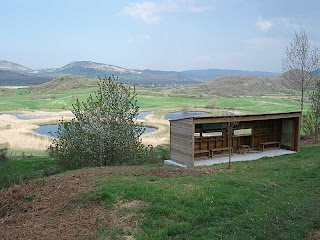
Now, with the new observatory, it is possible to take refuge the days of bad weather.